Working with a spoken-language interpreter
Prepare for conversations with a qualified interpreter and support clear, respectful communication.
Opening your page…
You can still use the navigation while it loads.
Knowledge for everyday practice
Knowledge, practical tools, and perspectives for fair services and inclusive workplaces.
Explore a topic
Understanding differences without making assumptions about the person in front of us.
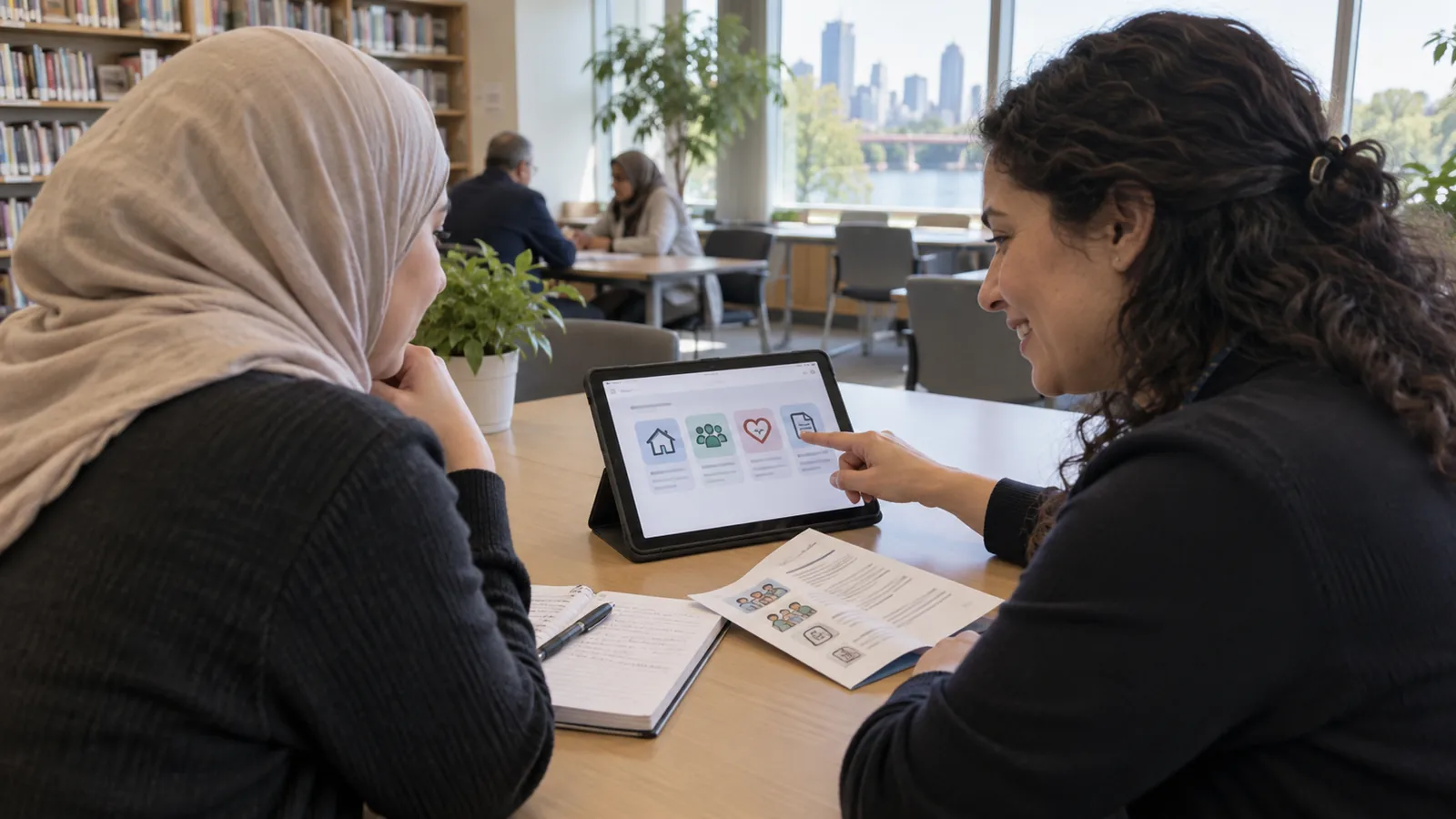
Book the right language and dialect, and brief the interpreter before the conversation. Speak to the person, use short sentences, and check understanding. Do not use a family member, a child, or a bilingual colleague…
What might you learn by asking someone how they prefer to communicate, rather than assuming that a familiar approach will work for them?
93 resources found
The national standards for culturally and linguistically appropriate services in health and human services, published by the U.S. Office of Minority Health. Use…
Outside source; check before use. A public source outside this program. Check the current source before relying on it.Start by identifying the languages people need and the vital documents that require translation and human review. Make a qualified interpreter available at…
A community brief can help you prepare for Minnesota work, but it cannot describe any one person. Use it to ask better questions, check access, and involve the…
Research and sources · Common questions · Toolkit Studio
Explore at your own pace. This learning is optional. Saved notes and progress stay on this device until you delete them; anyone using this computer may see them. They are not shared with supervisors or program staff.
Participation and course completion in this program do not count toward DHS-required training credits unless management, a director, or DHS leadership expressly approves an exception.

Curiosity that does not end — and a form that still needs a who, data, and a date.

A compact, practice-first guide for learning without turning people into checklists.

A compact, practice-first guide for learning without turning people into checklists.

A compact, practice-first guide for learning without turning people into checklists.