
Opening your page…
You can still use the navigation while it loads.
Opening your page…
You can still use the navigation while it loads.
DSD Service System · Foundations
What competitive integrated employment means, why customized employment exists for people the usual hiring process screens out, and what staff can do so that work is the expectation rather than the exception.
50–55 minutes · 5 lessons · Voluntary learning
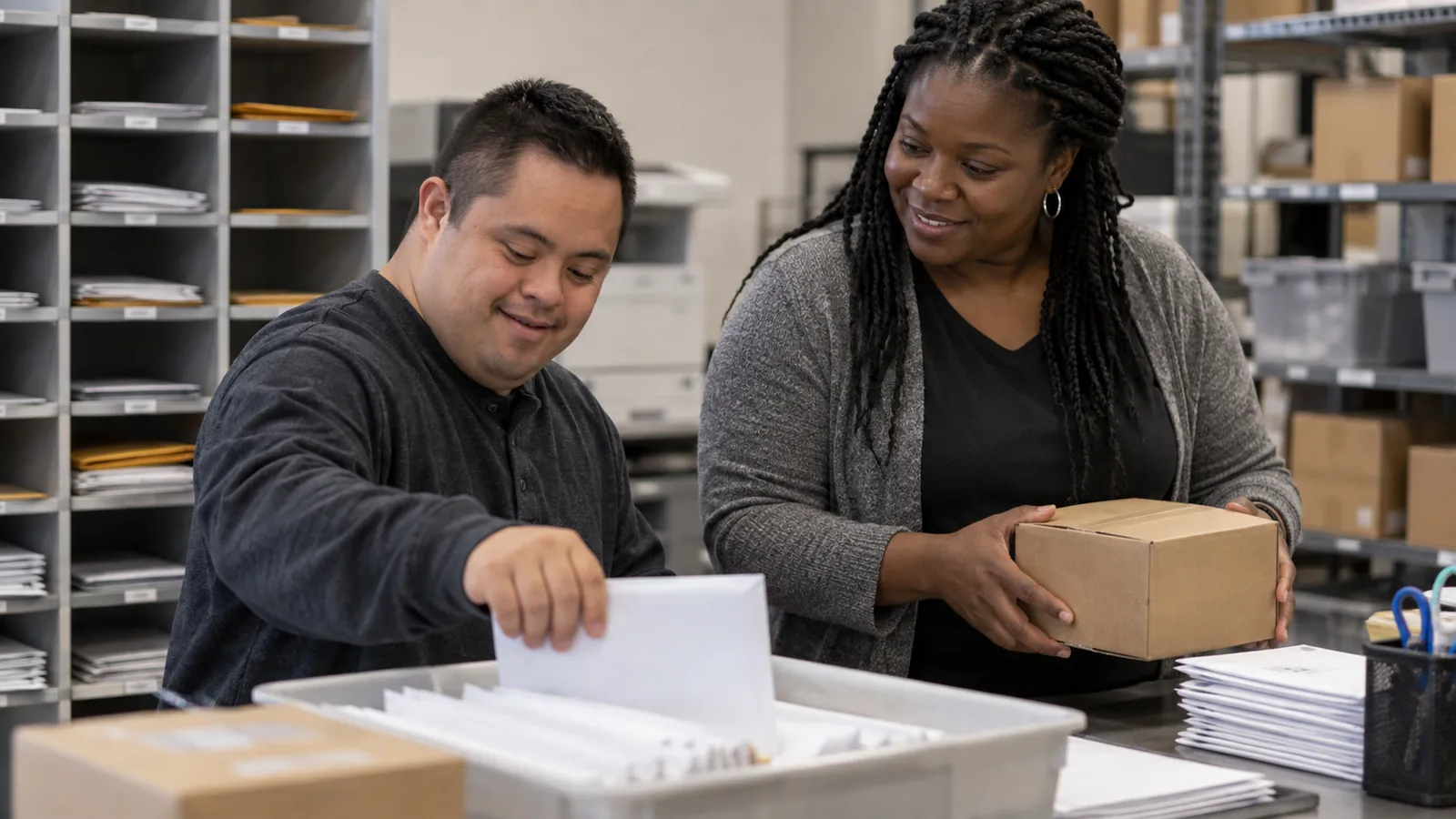
Learn the definition, the settings it excludes, and why the distinction matters more than it looks.
Learn what customized employment is, whom it serves, and how it differs from fitting a person into an existing job description.
Learn what discovery is, why it starts in the person's life rather than in an office, and what it produces.
Learn why the fear of losing benefits is rational, what the rules generally allow, and where to send a person for an answer about their own situation.
Hold a conversation that starts from the expectation of work and ends with one next step.
Ask one person you support who does not work whether anyone has asked them what work they would want, and what happened.
Most adults work, and most people with disabilities want to. The gap between those two facts is not mainly about ability. It is about a hiring process built for people who can sell themselves in an interview, service systems that historically treated day programs as the destination, and a fear of losing benefits that is entirely rational until someone explains the rules. This module covers what competitive integrated employment means, how customized employment finds work for people the usual process screens out, what discovery is, how to talk about benefits without frightening anyone, and how to hold an employment conversation that starts from the expectation of work. Nothing here is scored, ranked or collected.
Not job-ready usually means not ready for the usual process. It says very little about whether the person can work.
Make competitive integrated employment the expected outcome, find work for people the usual process screens out, and keep the fear of losing benefits from deciding the question.
Hold one employment conversation that starts from the expectation of work and ends with a next step.
Participation and course completion in this program do not count toward DHS-required training credits unless management, a director, or DHS leadership expressly approves an exception.
State information on employment services and supports for Minnesotans with disabilities, including Employment First.
Minnesota's plan, including its goals for competitive integrated employment.
Federal description of customized employment and the discovery process.
State vocational rehabilitation services for people with disabilities, including supported and customized employment.
Minnesota's free resource for people with disabilities, including benefits planning and work-related questions.
Federal information on work incentives for people receiving disability benefits.