
Opening your page…
You can still use the navigation while it loads.
Opening your page…
You can still use the navigation while it loads.
Disability Inclusion · Foundations
Choose words that describe rather than define, ask before helping, speak to the person, and handle interpreters, communication devices and service animals with confidence.
45–55 minutes · 4 lessons · Voluntary learning
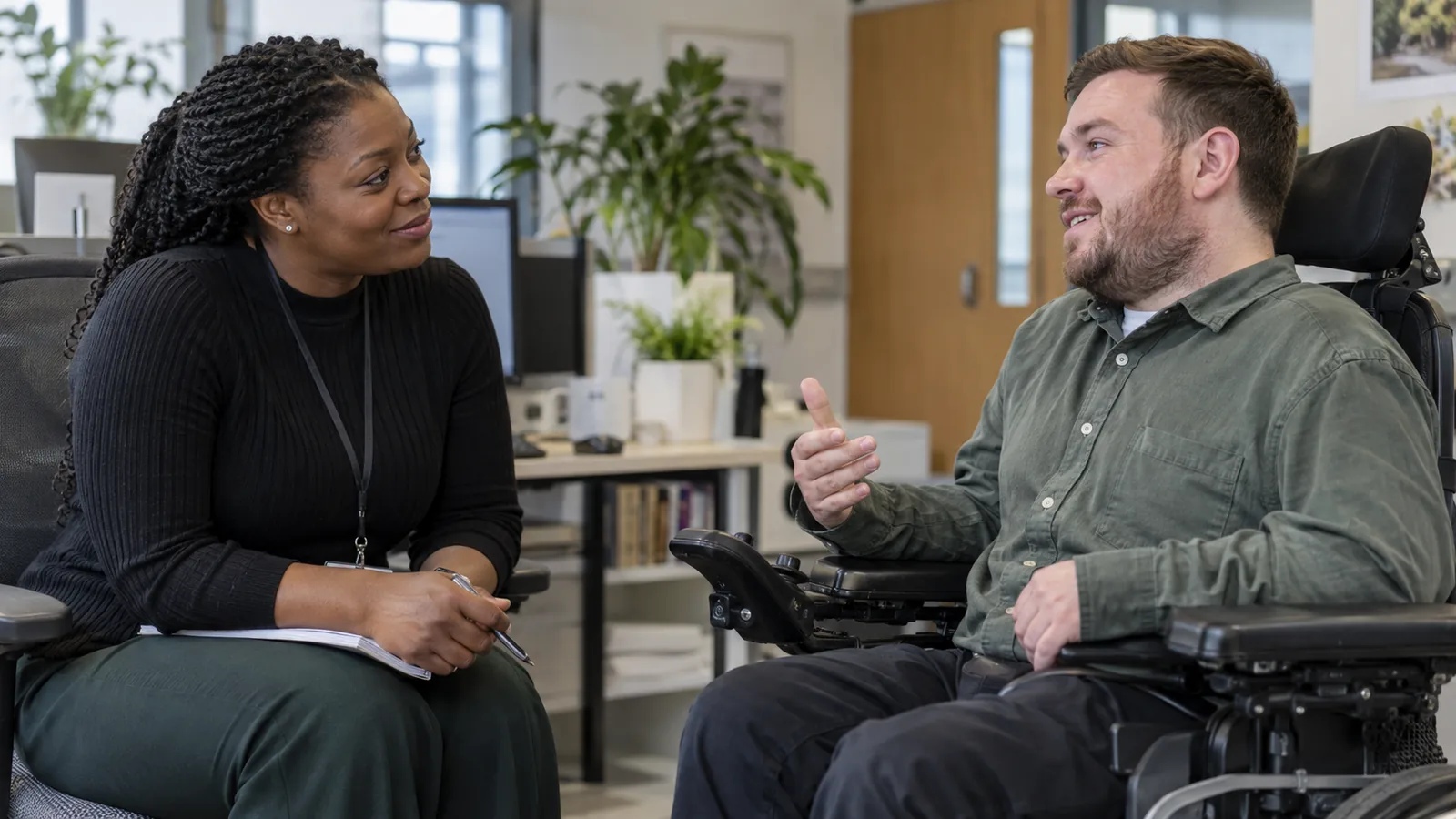
Use specific, neutral language, learn where the common phrases came from and why they land badly, and let the person settle the person-first or identity-first question.
Handle the most common in-person moments well: offering help, mobility devices and personal space, eye level, and conversations that include an interpreter, companion or support worker.
Slow down for speech disabilities, work comfortably with communication devices and relay calls, offer plain language without condescension, and take a non-apparent disability at face value.
Know the two questions staff may ask about a service animal, what may not be asked or required, and how to repair a mistake quickly without making it about you.
Review one document, template or sign you own for labels, euphemisms and pity language, rewrite what you find, and practice “Would you like assistance?” in your next in-person interaction.
Most disrespect toward disabled people is not meant. It comes from habits of speech and helpfulness that nobody examined. This course examines them. You will practice language that is specific and neutral, learn why the person’s own preference settles the person-first or identity-first question, and work through the moments that make staff nervous: an interpreter in the room, a communication device, a slow phone call, a service animal at the counter. You will leave with a small set of habits that make you easier to talk to and safer to ask.
Describe, do not define. Ask, then follow the answer. Speak to the person. Two questions, no papers.
Keep the habits from this course within reach during ordinary interactions with the public and with colleagues.
Rewrite three phrases in something you own and practice one etiquette habit every day this week.
Participation and course completion in this program do not count toward DHS-required training credits unless management, a director, or DHS leadership expressly approves an exception.
Language preference, neutral language, and cautions against euphemism, pity and condescending portrayals.
Definition of a service animal, the two permitted questions, and what businesses and governments may not require.
Official ADA information, including effective communication requirements for state and local governments.
Guidance and training on effective communication, interpreters, relay services and disability etiquette.
Practical information on accommodations and on interacting respectfully with employees who have apparent and non-apparent disabilities.
State council resources on disability etiquette, rights and access in Minnesota.