
Opening your page…
You can still use the navigation while it loads.
Opening your page…
You can still use the navigation while it loads.
DSD Service System · Practice
What brain injury does that nobody can see, why a person can seem fine and be struggling, how fatigue and awareness shape every interaction, and what practice looks like when it is built for the injury rather than around it.
50–55 minutes · 5 lessons · Voluntary learning
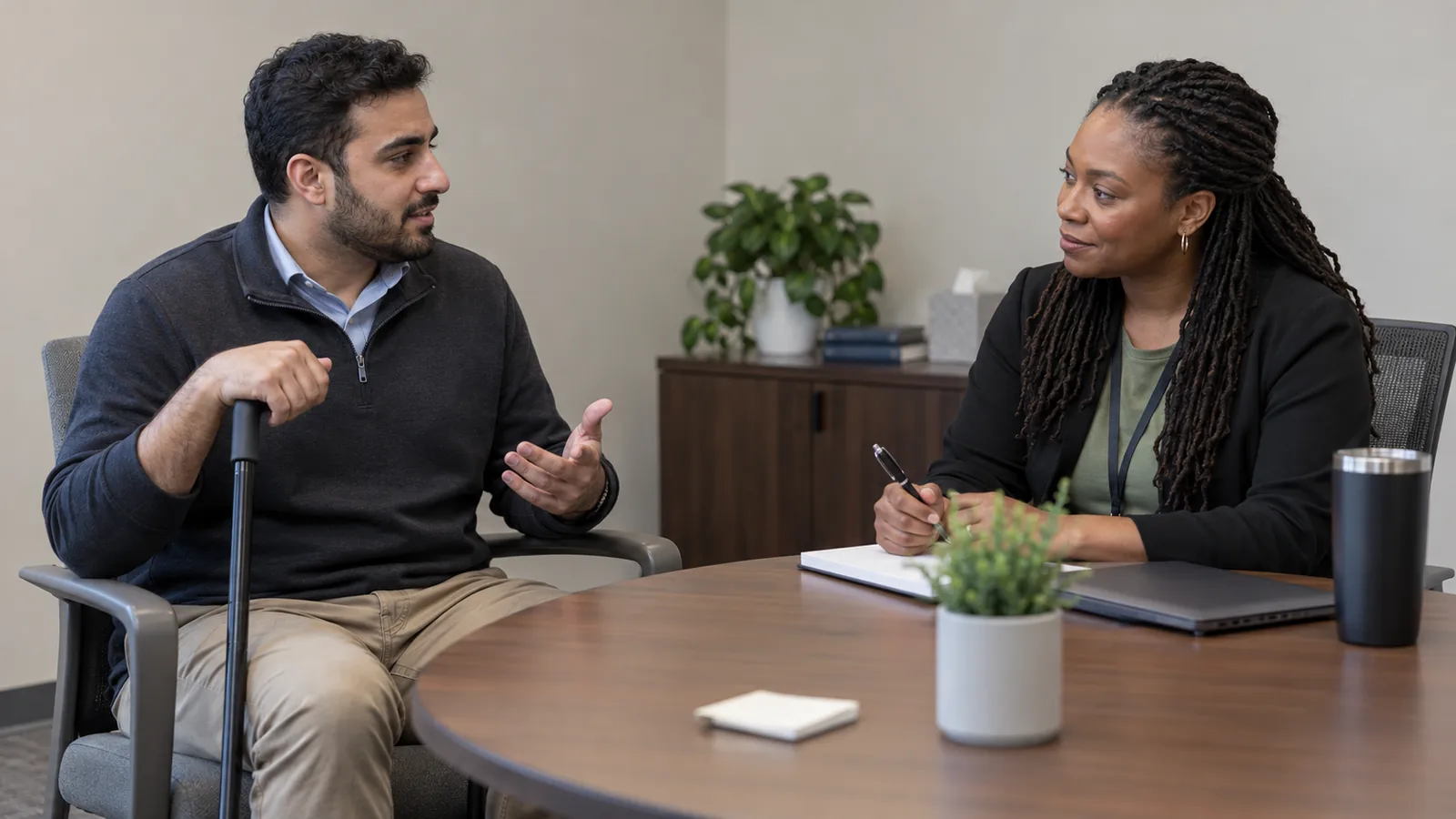
Meet the common effects of brain injury and understand why most of them are invisible to the people trying to help.
Understand cognitive fatigue and change the length, timing and order of your interactions to account for it.
Learn what impaired self-awareness is, why it is not denial, and how to plan with a person who does not perceive the changes you are planning for.
Read the behaviors most often attributed to attitude or personality as effects of the injury, and name the support each implies.
Review your own practice with people living with brain injury and change one thing about how you meet with them.
Shorten your next meeting with a person living with brain injury, put the most important thing first, and send a written summary afterwards.
Brain injury is the disability most often missed by the people whose job it is to notice. The person walks in, speaks well, and seems fine. What is not visible is the fatigue that arrives after forty minutes, the slowed processing that means a question answered quickly was not understood, the memory that will not hold this conversation until tomorrow, and the awareness that may not register any of it. This module covers what brain injury commonly does, why it is so often invisible, how fatigue and awareness shape every interaction, how behavior gets misread, and how to review your own practice so it works for the injury rather than around it. Nothing here is scored, ranked or collected.
The meeting captures the person at their best, and the support needs live in the hours the meeting does not see.
Build interactions for the injury rather than around it: short, early, quiet, important thing first, written afterwards, informed by people who see the person across days.
Run the interaction review on your own practice and put the important thing first at your next meeting.
Participation and course completion in this program do not count toward DHS-required training credits unless management, a director, or DHS leadership expressly approves an exception.
Minnesota resource on brain injury, including effects, supports and resource facilitation.
National information on brain injury, its effects and living with brain injury.
State information on the brain injury waiver and the services it funds.
Federal public health information on traumatic brain injury, its effects and recovery.
Research-based factsheets for people living with brain injury and those who support them, including fatigue, memory and awareness.
State council offering guidance and technical assistance on disability access and policy in Minnesota.