
Opening your page…
You can still use the navigation while it loads.
Opening your page…
You can still use the navigation while it loads.
DSD Service System · Foundations
The difference between a service delivered and a life changed, how to ask about outcomes in the person's terms, and what a quality review looks like when it starts from the person rather than the file.
45–50 minutes · 4 lessons · Voluntary learning
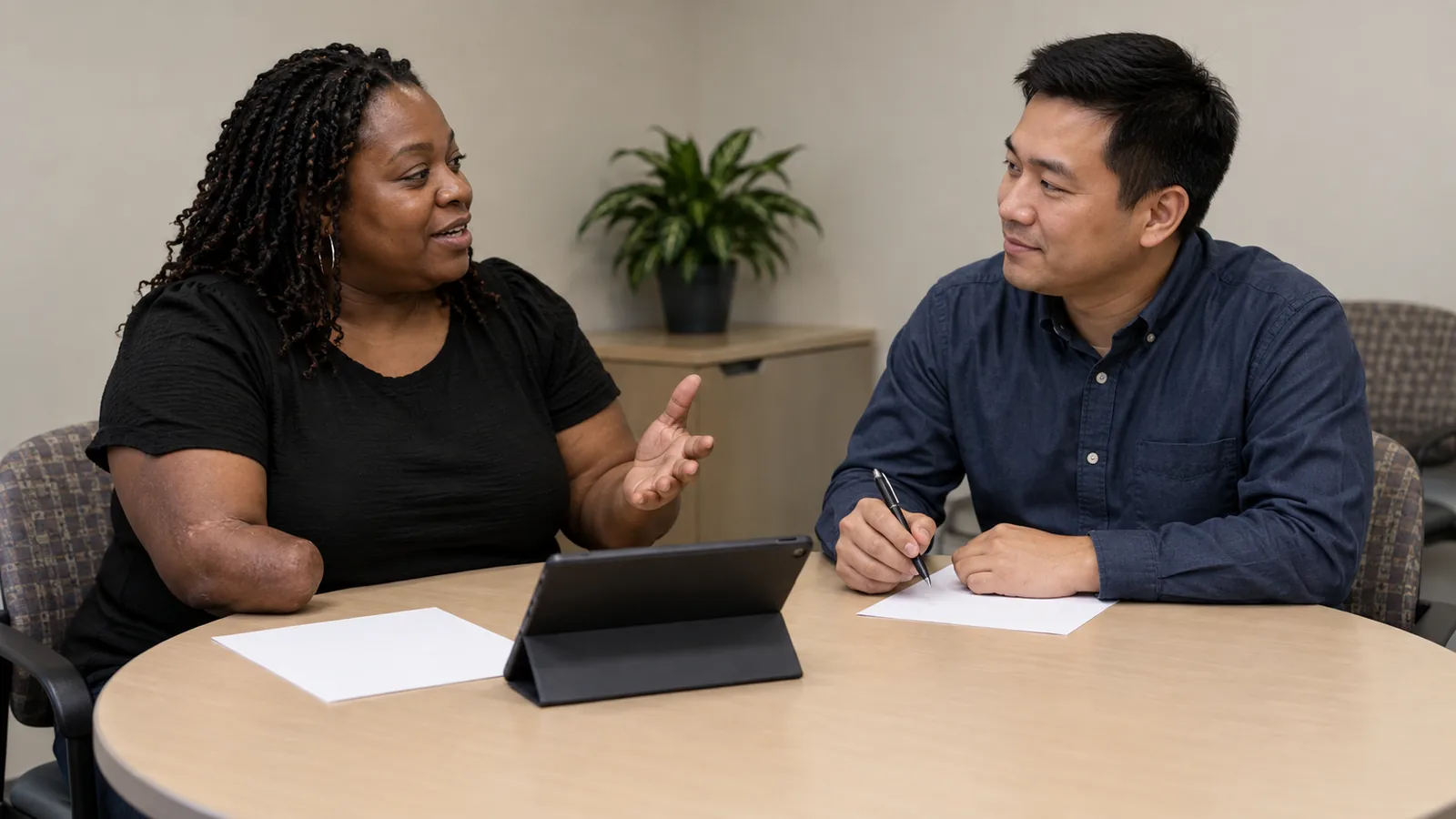
Learn why a system built to count what it does drifts toward reporting outputs as outcomes, and how to tell them apart.
Learn the areas people themselves use to describe a good life, and why no two people weight them alike.
Learn to hold an outcome conversation in which the person defines the outcome, rather than choosing from the ones the service offers.
See what changes in a quality review when the first source is the person rather than the file, and apply it to one review you take part in.
Ask one person you support what a good year would look like, in their words, and compare the answer to the goals in their plan.
A service system is very good at counting what it does: units delivered, plans completed, visits made. It is much less practiced at asking whether any of that changed a person's life in a direction the person wanted. This module is about the second question. It covers the difference between outputs and outcomes, the domains people themselves use to describe a good life, how to ask about outcomes without leading, and how a quality review changes when it starts from the person rather than from the file. Nothing here is scored, ranked or collected.
A completed plan is an output. Whether the person's life moved in a direction they wanted is the outcome, and only they can say.
Keep the difference between what the service did and what changed in the person's life visible in every plan, review and report.
Hold one outcome conversation and record the answer in the person's words.
Participation and course completion in this program do not count toward DHS-required training credits unless management, a director, or DHS leadership expressly approves an exception.
State program information on services for Minnesotans with disabilities, including person-centered planning and quality.
Minnesota's plan for supporting people with disabilities to live, learn, work and participate in the most integrated setting, including measurable goals and quality-of-life reporting.
Federal description of home and community-based services, including person-centered planning and quality requirements.
Public work on measuring the quality of home and community-based services, including domains of person-defined quality of life.
Federal agency supporting community living for older adults and people with disabilities, including outcome-focused quality work.
State council offering guidance and technical assistance on disability access and policy in Minnesota.