
Opening your page…
You can still use the navigation while it loads.
Opening your page…
You can still use the navigation while it loads.
Disability Inclusion · Applied inclusion
Plan in-person, hybrid and virtual gatherings that people can actually attend, follow and shape, and recover well when something fails on the day.
48–54 minutes · 5 lessons · Voluntary learning
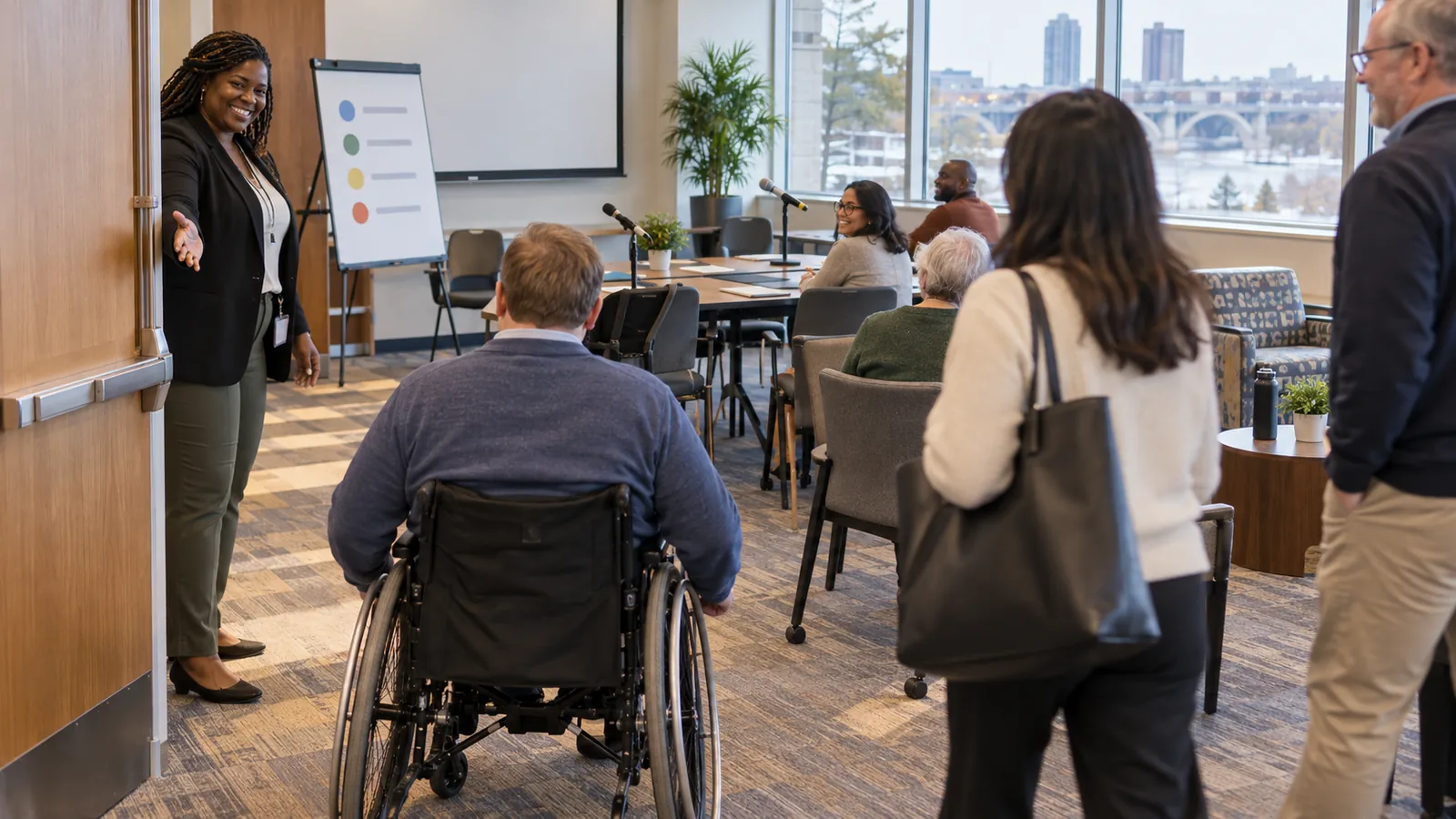
Move accessibility from a late request to the first planning step, using a checklist that decides the room, the platform and the invitation together.
Check the path from the street to the seat, the seating, the restrooms, the sound, the light, the food and the emergency plan, so the room itself does not exclude anyone.
Configure the platform, run interpretation and captions properly, make chat, polls, shared documents and breakout rooms usable, and keep remote participants equal in a hybrid room.
Send materials people can use before the session, offer more than one way to contribute during it, and make what comes afterward as accessible as what came before.
Handle the interpreter who does not arrive, the captions that stop, the room that changed or the elevator that is out, without making the person with the access need carry the problem.
Take the next meeting, event or training you convene through the checklist in lesson one before the invitation goes out. Keep the changes in your team’s template so they happen by default.
Most of the access failures at a meeting were decided weeks earlier, when the invitation went out without a question about access, the room was booked without checking the route, or the platform was chosen without turning on captions. This course moves the work to where it belongs: before the invitation. You will plan in-person, hybrid and virtual gatherings with a checklist, make materials and participation methods accessible, and handle the interpreter who does not arrive or the captions that fail without making the person with the access need carry the problem.
Plan access before the invitation. Walk the route. Captions on. A host for the remote side. Decide with the person when something fails.
Keep the planning checklist, the format-specific essentials and the recovery sequence in view for every gathering you convene.
Run your next gathering through the checklist before the invitation goes out and keep the changes in your template.
Participation and course completion in this program do not count toward DHS-required training credits unless management, a director, or DHS leadership expressly approves an exception.
Federal guidance on planning and running meetings that are accessible in person and online.
Practical guidance for organizers, speakers and participants on accessible presentations and meetings.
Information on accessible events, effective communication and auxiliary aids and services under the ADA.
Requirements for public entities to provide auxiliary aids and services such as interpreters and captioning.
Accessibility standards for buildings, facilities and information technology, including the ADA Standards for Accessible Design.
State resources on accessible events and public participation in Minnesota.