
Opening your page…
You can still use the navigation while it loads.
Opening your page…
You can still use the navigation while it loads.
Disability Inclusion · Practitioner
Lead disability inclusion conversations that people can join without disclosing, that answer defensiveness and misinformation calmly, and that everyone can take part in.
40–50 minutes · 4 lessons · Voluntary learning
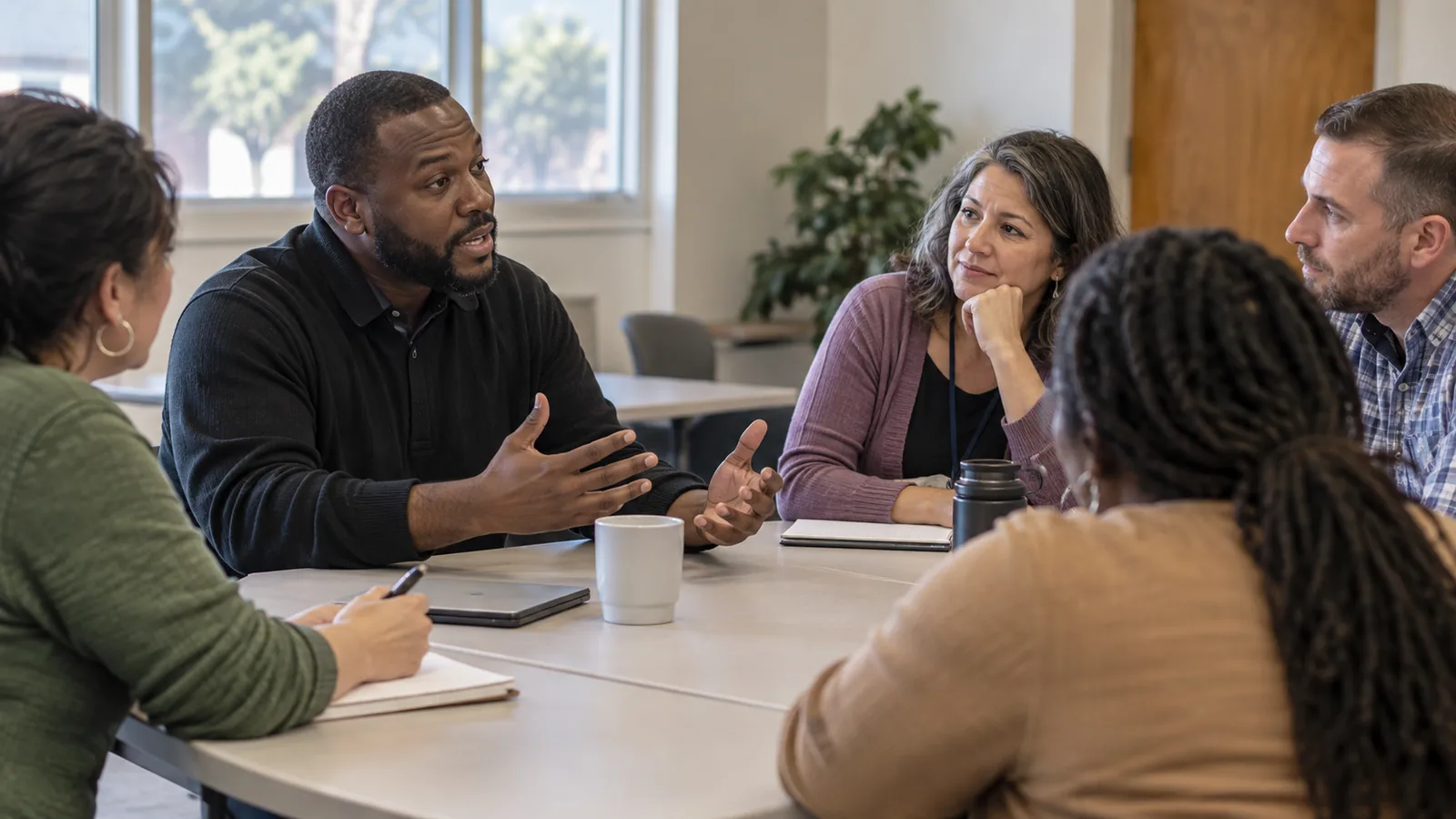
Design prompts, activities and openings so that people can reflect and contribute without anyone being asked, or feeling expected, to share a disability.
Recognize the three most common difficult moments in a disability inclusion session and respond to each in a way that corrects the content and keeps the person in the room.
Write and choose learning scenarios that center a specific barrier, give the disabled person competence and agency, and avoid the default images and inspiration framings that teach the wrong lesson.
Set and hold the facilitation norms that let everyone take part: materials ahead, captions, described visuals, pacing, breaks, multiple channels and no forced cameras, in every format and in ongoing peer learning groups.
Rewrite the opening ten minutes of a session you already run so that it invites reflection without disclosure, names the accessibility norms, and gives people two ways to contribute. Run it and note what changed.
Facilitating a conversation about disability is different from facilitating most other topics, because some of the people in the room are the subject and may not want anyone to know. This course teaches you to design sessions nobody has to disclose in, to respond to defensiveness, misinformation and the anxiety of saying the wrong thing without shaming anyone, to write scenarios that teach without stereotyping, and to run virtual and in-person sessions that every participant can actually take part in.
Nobody has to disclose. Every myth gets answered. Every scenario ends in a decision. Everyone can take part.
Keep the facilitator’s four jobs in view: protect privacy, correct content kindly, teach with respectful scenarios, and hold accessible norms.
Rewrite the opening ten minutes of one session with the artifact, and script your response to the myth you hear most.
Participation and course completion in this program do not count toward DHS-required training credits unless management, a director, or DHS leadership expressly approves an exception.
Respectful, specific language and cautions against pity, inspiration and “superhuman” portrayals, useful for scenario writing and live correction.
Plain-language explanation of what counts as a service animal under the Americans with Disabilities Act, for correcting a common piece of misinformation.
Practical guidance for speakers and organizers on accessible materials, describing visuals, captions and pacing.
Population context, including the estimate that about one in four adults in the United States has a disability, and the range of visible and non-apparent disabilities.
Accurate information on accommodations and the interactive process for answering misinformation about cost and fairness.
Minnesota-specific guidance on access, etiquette and inclusive practice for facilitators working in state and county settings.