
Opening your page…
You can still use the navigation while it loads.
Opening your page…
You can still use the navigation while it loads.
Disability Inclusion · Practitioner
Walk a real journey, name every kind of barrier you find, decide what to fix first, and separate the fix you can make this week from the redesign that ends the problem.
45–55 minutes · 4 lessons · Voluntary learning
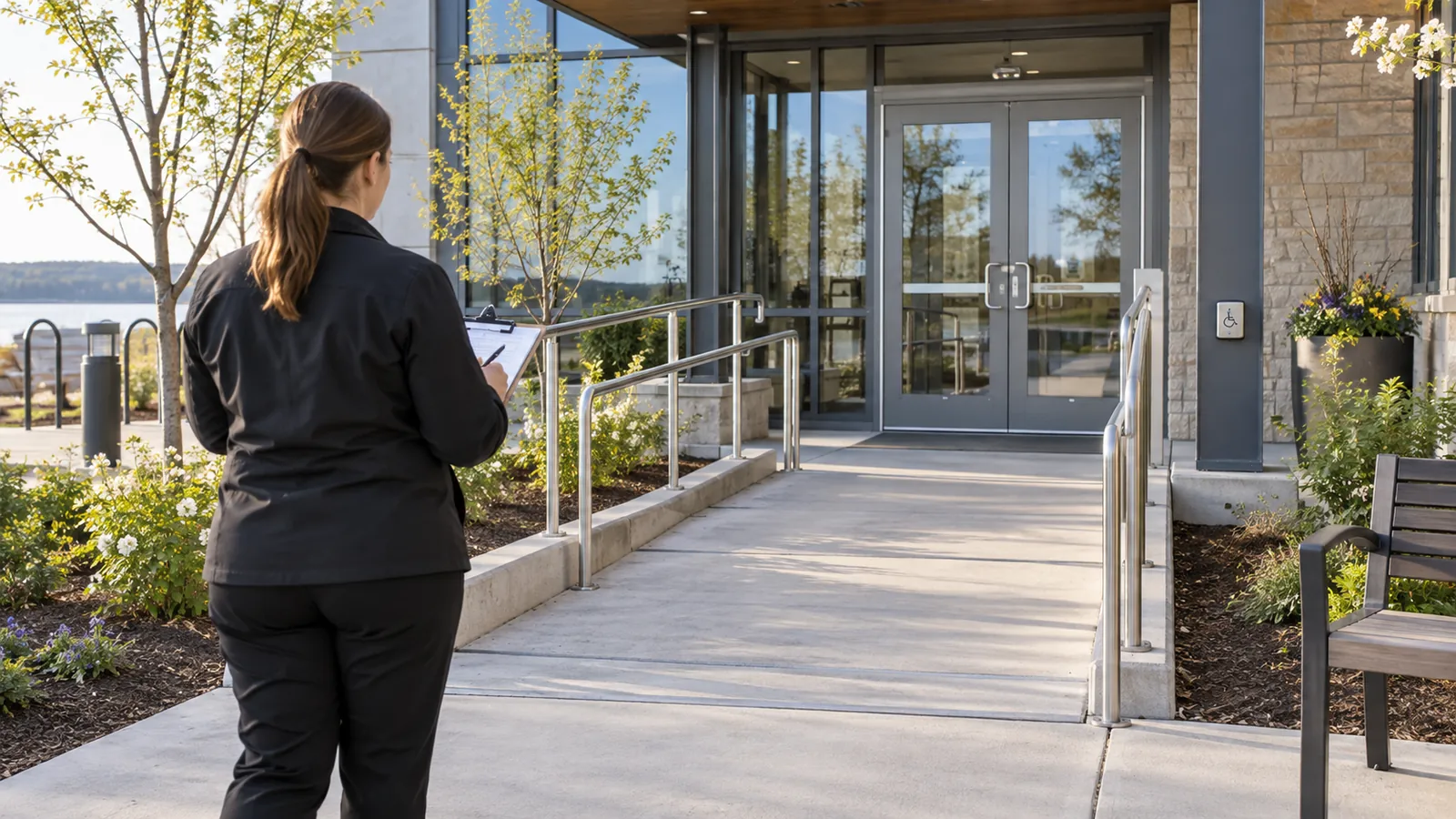
Pick the right unit of analysis, map its touchpoints, and walk it with access lenses instead of reviewing it from a desk.
Learn to name a barrier precisely, because the category tells you who owns it and what kind of fix will work.
Decide what to fix first in a way you can defend, without letting difficulty quietly demote a legal duty.
Complete the barrier analysis canvas, separate what you can do this week from the redesign that ends the problem, and write a proposal a decision maker can act on.
Choose one journey your unit owns. Walk it as a participant with at least one access lens, complete the canvas for the first barrier that stops someone, and put it in front of the person who owns the fix.
An accessibility audit is not a checklist you complete at a desk. It is a walk through a journey the way a person actually takes it, from the first notice to the last confirmation, looking for the point where someone is stopped. This course teaches a basic audit you can run on a service, a digital process, a meeting or an employee lifecycle. You will learn to recognize eight kinds of barrier, to prioritize honestly by impact, urgency, reach and feasibility, and to write an immediate fix and a systemic fix side by side on a barrier analysis canvas.
Walk it as a person would. Name the barrier precisely. Rank by impact first. Fix it twice: now, and for good.
Run a basic accessibility audit of a service, a digital process, a meeting or an employee lifecycle, and turn what you find into fixes with owners.
Complete one barrier analysis canvas this month and put it in front of the person who owns the systemic fix.
Participation and course completion in this program do not count toward DHS-required training credits unless management, a director, or DHS leadership expressly approves an exception.
ADA information, guidance and training, including materials on program access and self-evaluation for state and local governments.
Plain-language explanations of effective communication, program access and other Title II duties that audit findings often touch.
Federal accessibility standards for buildings, facilities and information and communication technology used when classifying physical and digital barriers.
Federal guidance on testing digital content and applications, including manual keyboard and screen-reader testing.
Foundational explanations of how people with disabilities use digital content, useful for choosing access lenses.
Minnesota resources on accessibility, disability law and access in state programs and facilities.